The sun had just risen — I deduced this from my watch, as the sky was obscured by a thick haze whose smell initially irritated the lungs but gradually became unremarkable. The street along the banks of the Buriganga River was full of cars, stalls of local vendors, and people moving at a dynamic pace in every possible direction.
I stepped out of the van parked in the middle of the commotion and pushed through the crowd up the road, gradually entering narrower and quieter alleyways where, without the help of a local friend, I would surely have gotten lost long ago. Niloy is a photographer born in Bangladesh; when asked about his profession, he proudly answers that he does everything I could need from him. Today he is playing the role of guide and taking me to a place with no address or unified name.
Słońce dopiero wstało – wywnioskowałem to patrząc na zegarek, ponieważ niebo było przysłonięte gęstą zawiesiną, której zapach początkowo drażnił płuca, lecz z czasem stał się obojętny. Ulica u wybrzeży rzeki Burigangi była pełna aut, straganów lokalnych sprzedawców i ludzi poruszających się w dynamicznym rytmie w każdym możliwym kierunku.
Opuściłem vana zaparkowanego pośrodku zgiełku i przecisnąłem się przez tłum w górę drogi, stopniowo wchodząc w węższe i spokojniejsze uliczki, w których bez pomocy lokalnego przyjaciela zapewne dawno bym się zgubił. Niloy jest fotografem urodzonym w Bangladeszu; pytany o zawód, dumnie odpowiada, że zajmuje się wszystkim, czego mogę od niego potrzebować. Dziś akurat pełni rolę przewodnika i zabiera mnie w miejsce bez adresu i ujednoliconej nazwy.
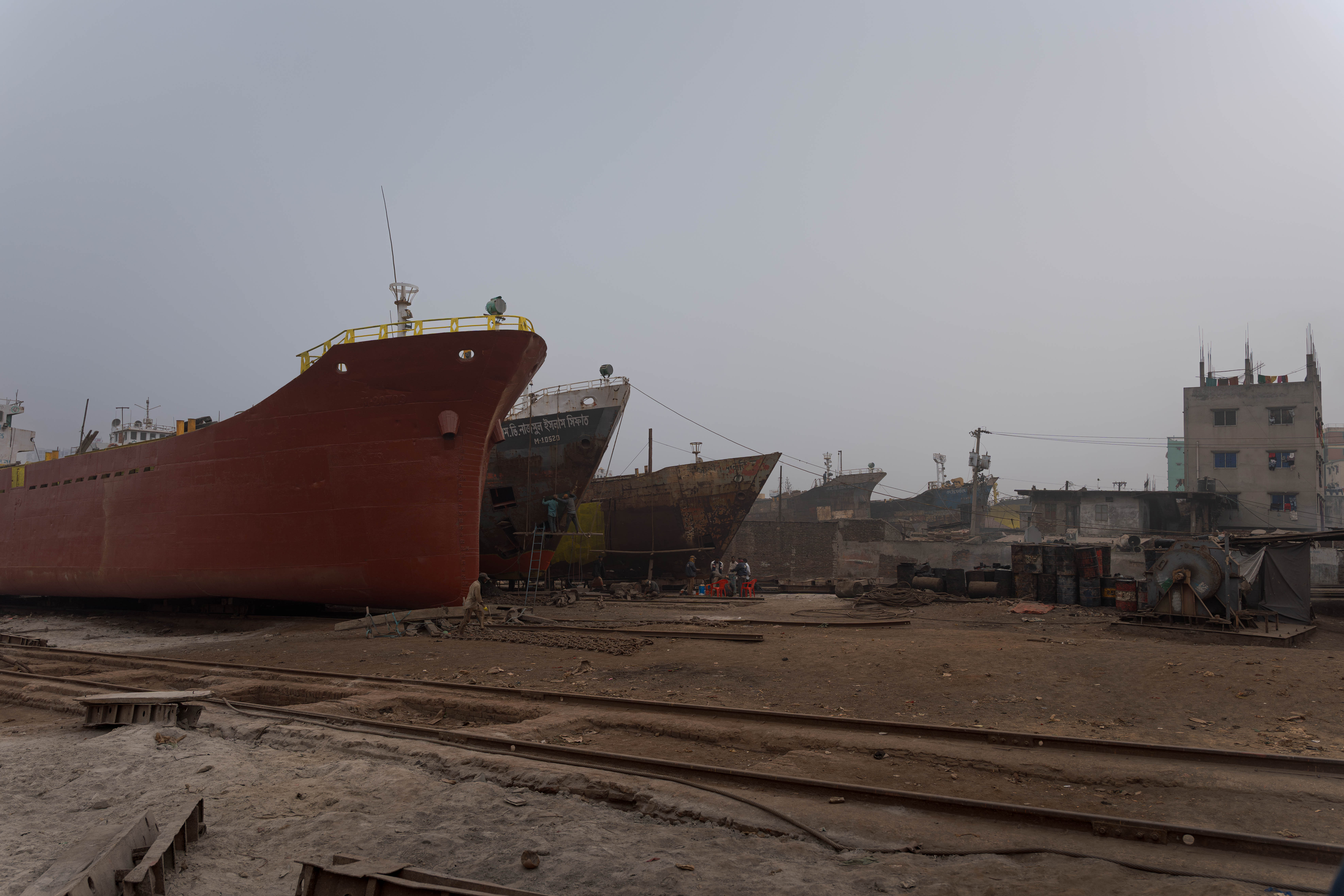
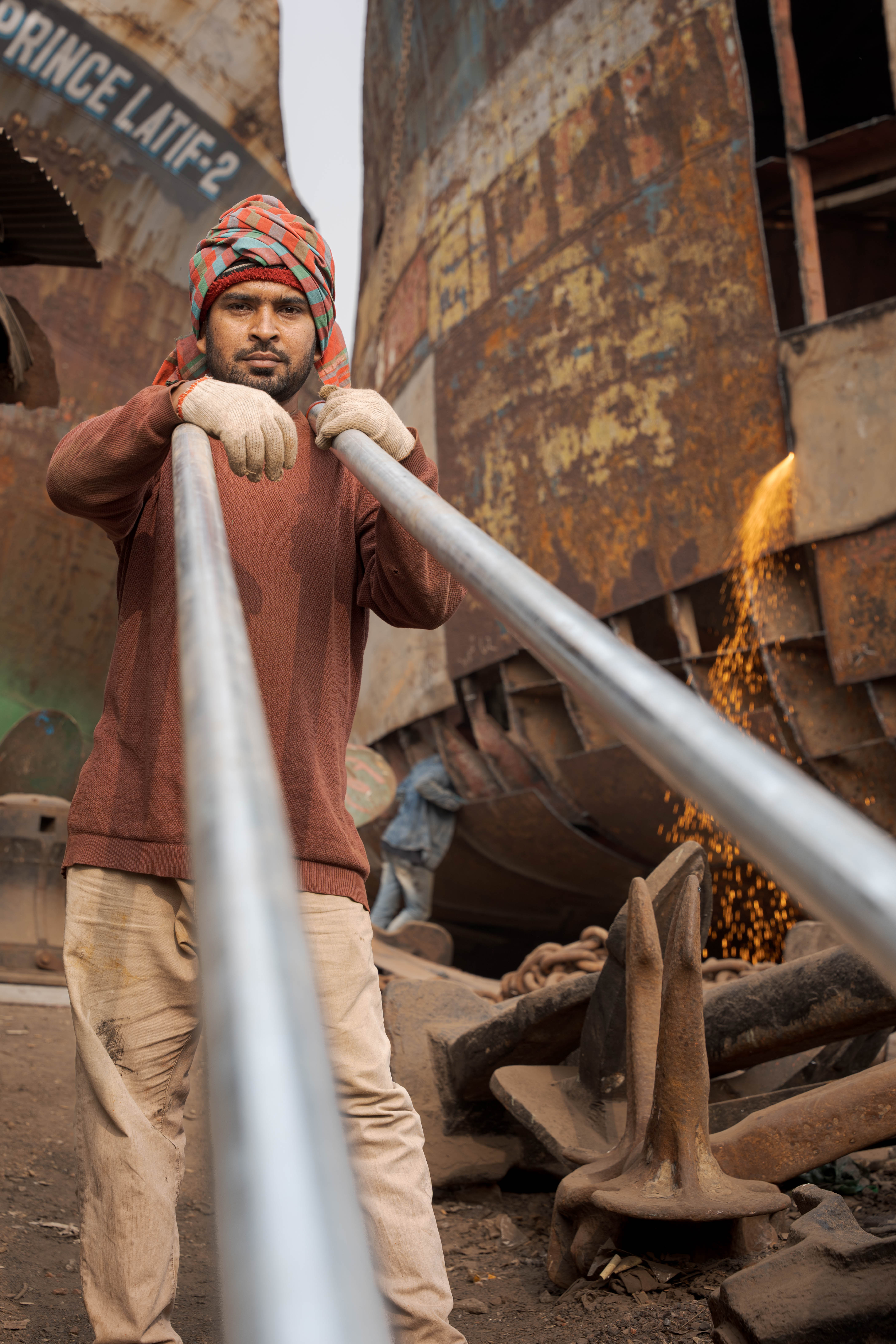
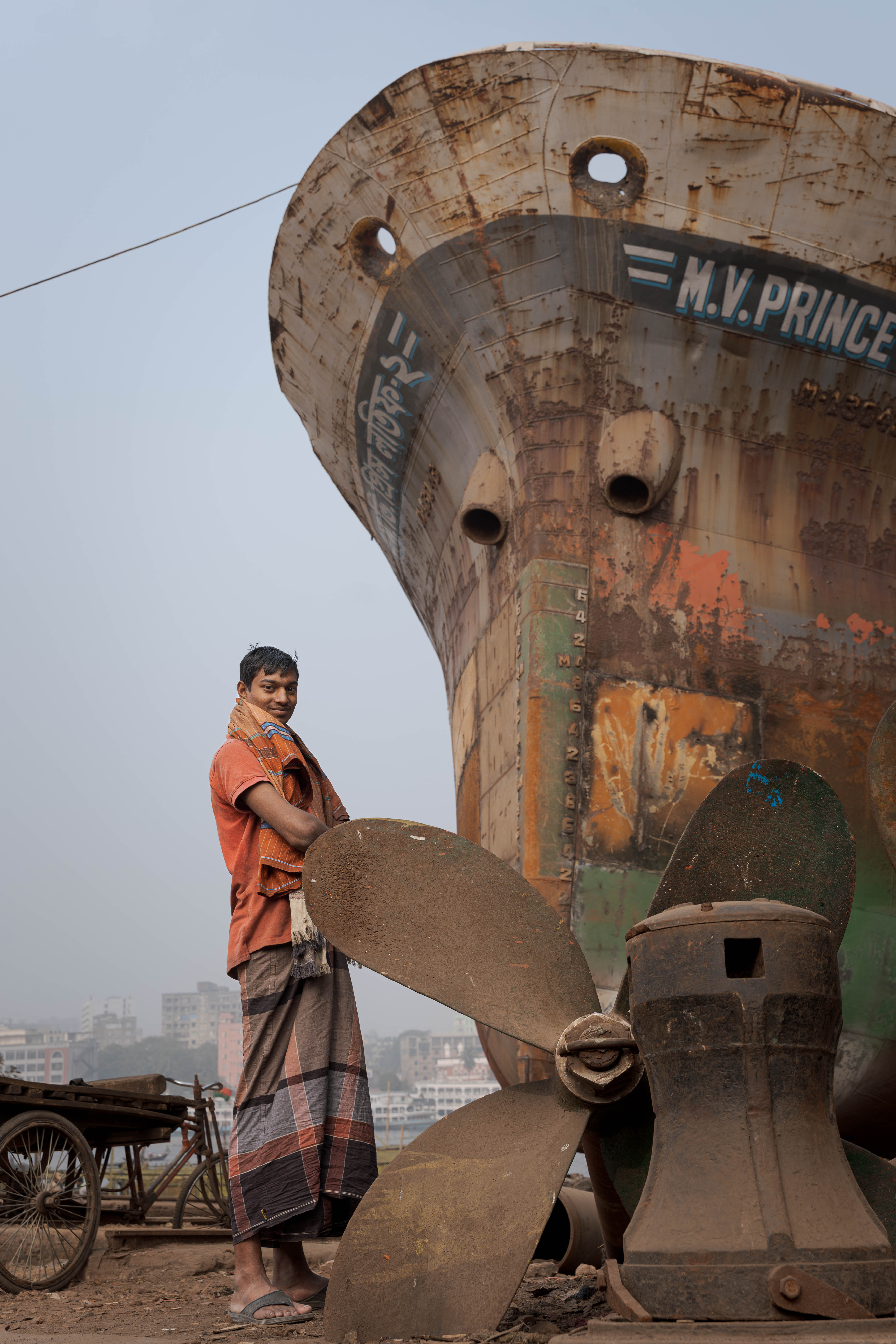
After navigating a short brick labyrinth, we reached the waterfront. Before my eyes stretched a riverbank entirely covered by enormous, decaying ships resting directly on the sandy soil. Their great hulls — once coated in bright lacquers during their heyday — were now dominated by rust and peeling paint. Some of the vessels had been stripped of key components some time ago, while the rest still waited in line for demolition.
Po pokonaniu krótkiego, ceglanego labiryntu dotarliśmy do wybrzeża. Moim oczom ukazał się brzeg rzeki w całości pokryty ogromnymi, niszczejącymi statkami osadzonymi bezpośrednio na piaszczystej glebie. Ich wielkie kadłuby – w latach świetności pokryte lakierami jaskrawych kolorów – zdominowała rdza i odpadające płaty farby. Niektóre z jednostek pozbawiono kluczowych elementów już jakiś czas temu, podczas gdy reszta nadal czekała w kolejce do rozbiórki.
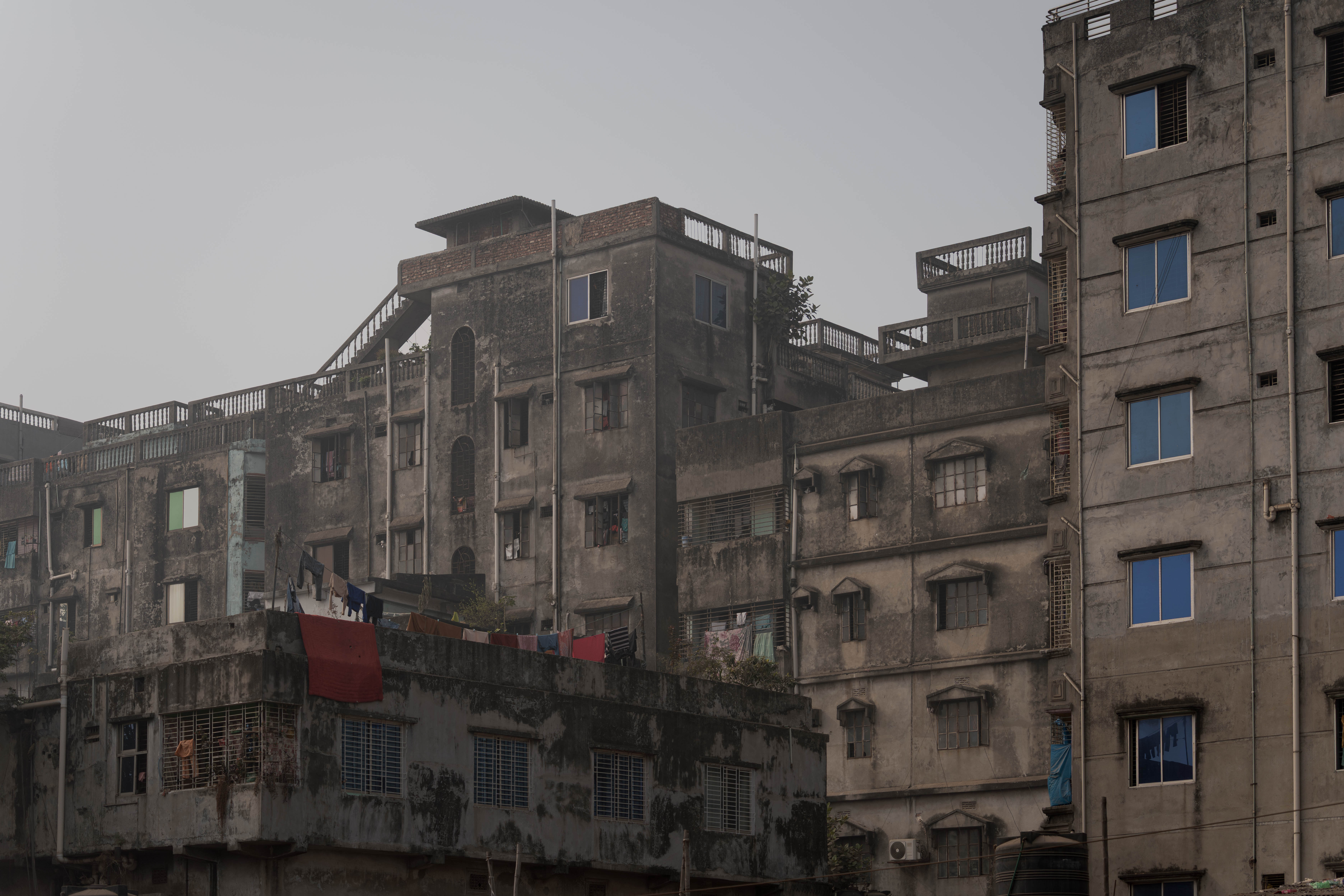
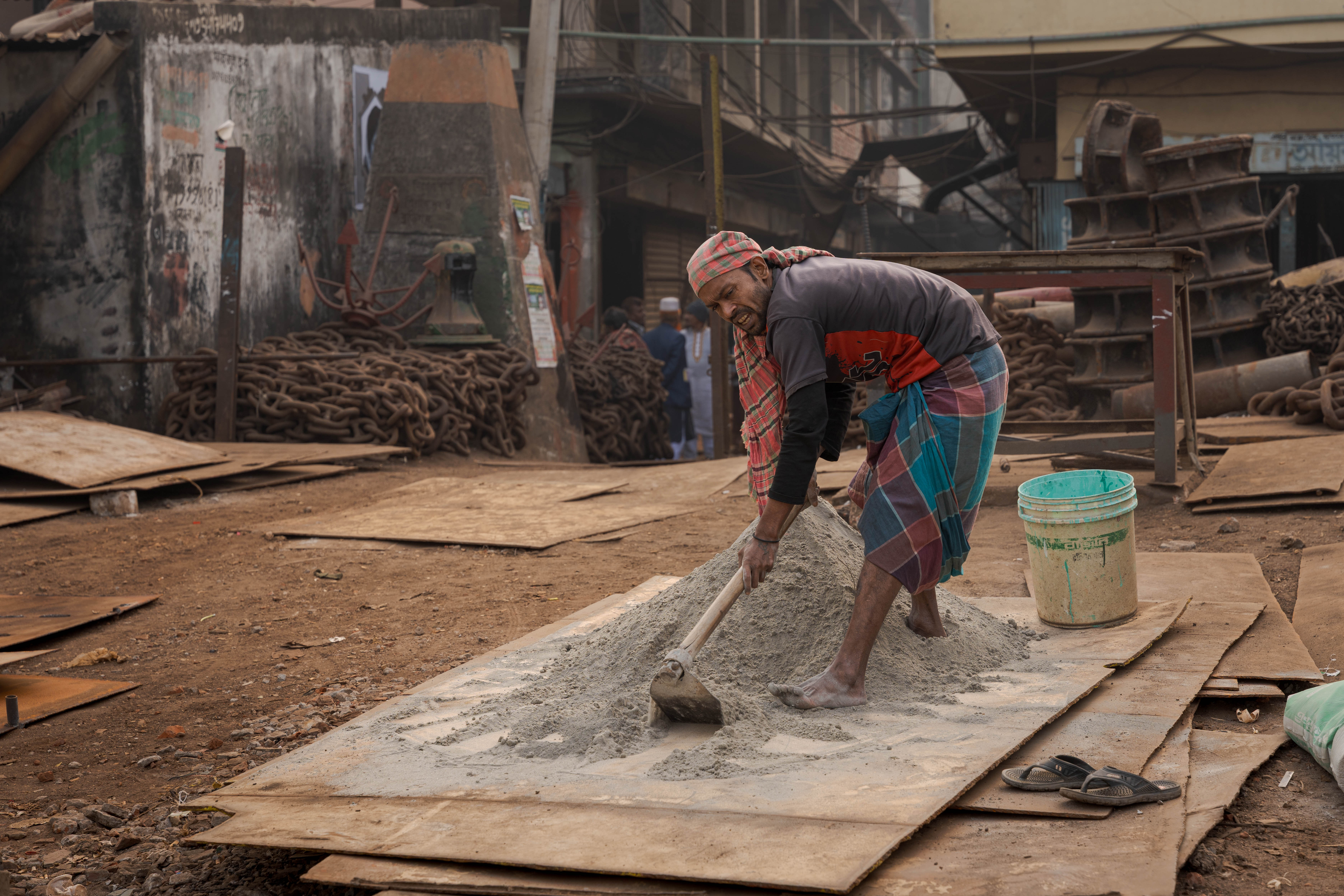
I moved closer to the waterfront, closer to the people who made this unusual yet fascinating place. Spotting a group of men sipping tea against a backdrop of metal giants, I reached for my camera. At that very moment I was surrounded by a cluster of children who appeared out of nowhere. They waved at me energetically, reaching out with visible excitement on their faces. I gave each of them a small gift brought from Poland, as Niloy had advised, and together with my new companions I moved along the shoreline. Among the skeletons of ships, groups of workers laboured to the sounds of saws and welding torches; large, worn-down residential buildings with workshops occupying their ground floors towered over the bustling surroundings. Photographing the area, I met residents who would stop working at the sight of me and ask to have their picture taken. What captivated me about Bangladesh during my brief stay was the fact that the people here seemed driven by curiosity. They rarely hid their faces at the sight of a lens — more often than not they would turn wide smiles toward it. One of the young men making his way through the workshop-lined alleyways stopped me and asked where I was from. After a short exchange consisting mostly of guesswork, I learned that he lived in one of the buildings ahead. He said it with pride, even though the block looked partially abandoned and its better days — if it had ever had any — were long past. He cherished the fact that his entire life revolved around this very place. Probably due to too great a cultural difference, I was unable to understand his enthusiasm — but I was certainly envious of it.
Podszedłem bliżej nabrzeża, bliżej ludzi tworzących to nietypowe, aczkolwiek fascynujące dla mnie miejsce. Widząc grupkę mężczyzn popijających herbatę na tle metalowych gigantów, sięgnąłem po aparat. W tym samym momencie zostałem osaczony przez gromadkę dzieci, które pojawiły się jakby znikąd. Energicznie machały do mnie, wyciągając ręce z widoczną ekscytacją na twarzach. Każdemu z nich dałem mały podarunek przywieziony z Polski, zgodnie z zaleceniami Niloya, i wraz z grupką nowych kompanów przemieściłem się wzdłuż wybrzeża. Pośród szkieletów statków grupy robotników pracowały przy dźwięku pił i spawarek; duże, podniszczone budynki mieszkalne z warsztatami zajmującymi pierwsze piętra górowały nad okolicą tętniącą życiem. Fotografując ten rejon, spotkałem się z mieszkańcami, którzy na mój widok przerywali pracę i prosili mnie o zdjęcie. To, co urzekło mnie w Bangladeszu w trakcie mojego krótkiego pobytu, to fakt, że tutejsi ludzie wydawali mi się być napędzani ciekawością. Zazwyczaj nie chowali twarzy w dłoniach na widok obiektywu, a często nawet eksponowali w jego stronę szerokie uśmiechy. Jeden z chłopaków przemierzających uliczki pełne warsztatów zaczepił mnie, pytając, skąd jestem. Po krótkiej dyskusji składającej się przede wszystkim z domysłów wydobyłem od niego informację, że mieszka w jednym z budynków przed nami. Mówiąc to, emanował dumą, mimo że blok wyglądał na częściowo opuszczony, a jego lata świetności – jeśli takowe kiedykolwiek miał – minęły dawno temu. Chwalił sobie fakt, że całe jego życie toczy się dookoła tego właśnie miejsca. Prawdopodobnie z powodu zbyt dużych różnic kulturowych nie byłem w stanie zrozumieć jego entuzjazmu, ale na pewno mu go zazdrościłem.
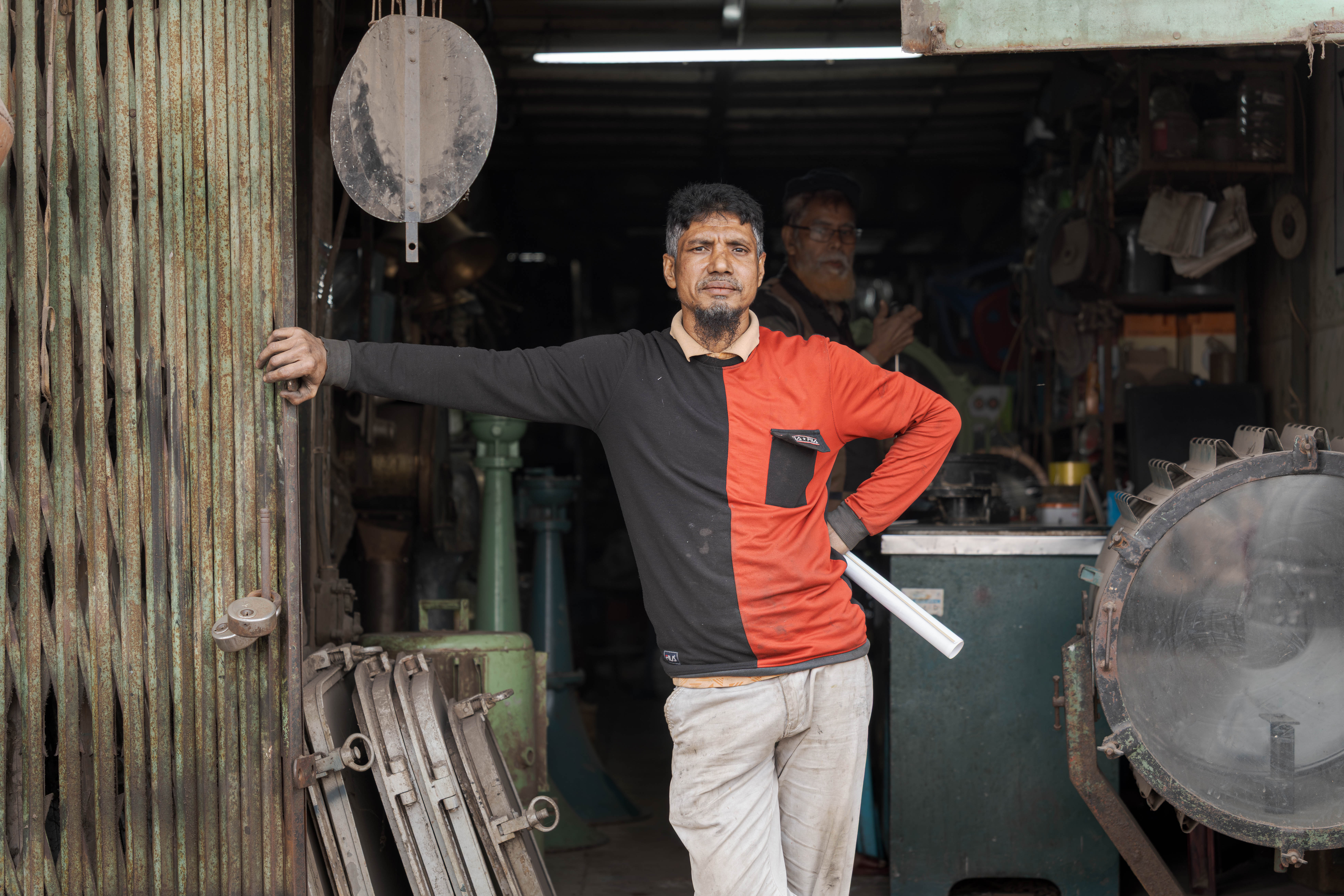
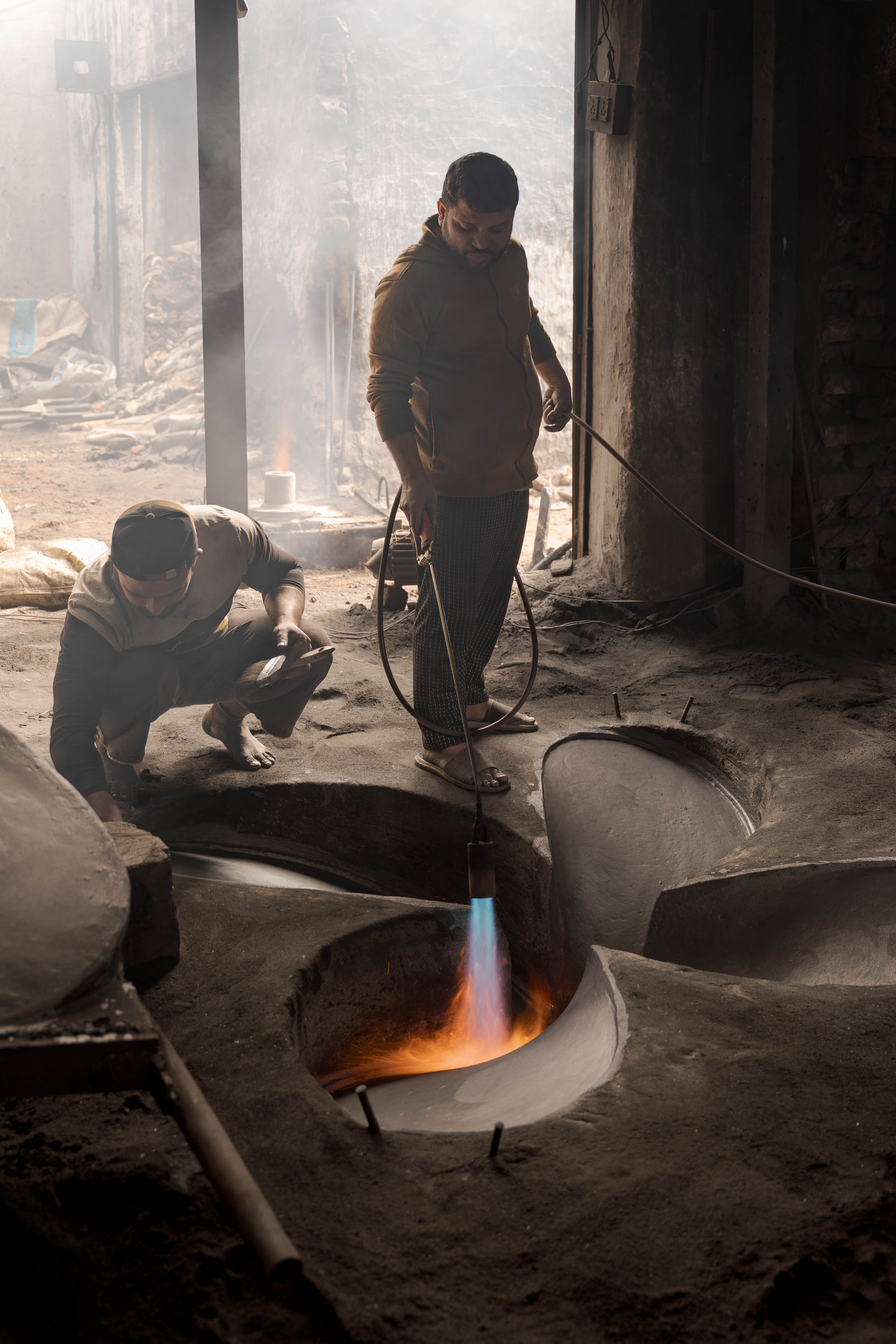
The ground-floor premises offered a variety of services — from selling food supplies to the workers there, to small workshops producing tools from recycled metal. From behind one of the tin gates came an intense noise resembling the sound of an aircraft engine. As I approached it, I felt the air growing warmer and my polyester t-shirt increasingly sticking to my body. I walked inside, ducking under a metal curtain. In a room of just a few square metres, two large men were sweeping the workshop floor with the scorching flame of a burner connected to a gas cylinder propped against the wall. I was told the place was used to create moulds that would then be filled with molten metal sourced from ship demolition. In this particular case, the moulds were being prepared for casting propeller screws no more than two metres in diameter. The finished product would likely be used in the construction of a new vessel — and in that way, the material's lifecycle would come full circle.
Lokale na dolnych piętrach budynków oferowały różnorakie usługi – od sprzedaży produktów spożywczych, w które zaopatrywali się tutejsi pracownicy, po małe warsztaty wytwarzające narzędzia z przetworzonego metalu. Zza jednej z blaszanych bram dobiegał intensywny hałas przypominający pracę silnika samolotu. Zbliżając się do niego, czułem, że wokół robi się cieplej, a mój poliestrowy t-shirt coraz bardziej przykleja się do ciała. Wszedłem do środka, przechodząc pod metalową kurtyną. W pomieszczeniu o powierzchni zaledwie kilku metrów kwadratowych dwaj masywni mężczyźni smagali podłogę pracowni rozżarzonym ogniem palnika podpiętego do butli gazowej leżącej pod ścianą. Wyjaśniono mi, że miejsce to służy do tworzenia odlewów, które następnie zostaną wypełnione roztopionym metalem pozyskanym z rozbiórki statków. W tym konkretnym przypadku formy przygotowywano do tworzenia śrub napędowych o średnicy nie większej niż dwa metry. Produkt końcowy zapewne zostanie wykorzystany przy budowie nowej jednostki i w ten sposób cykl życia materiału zatoczy koło.
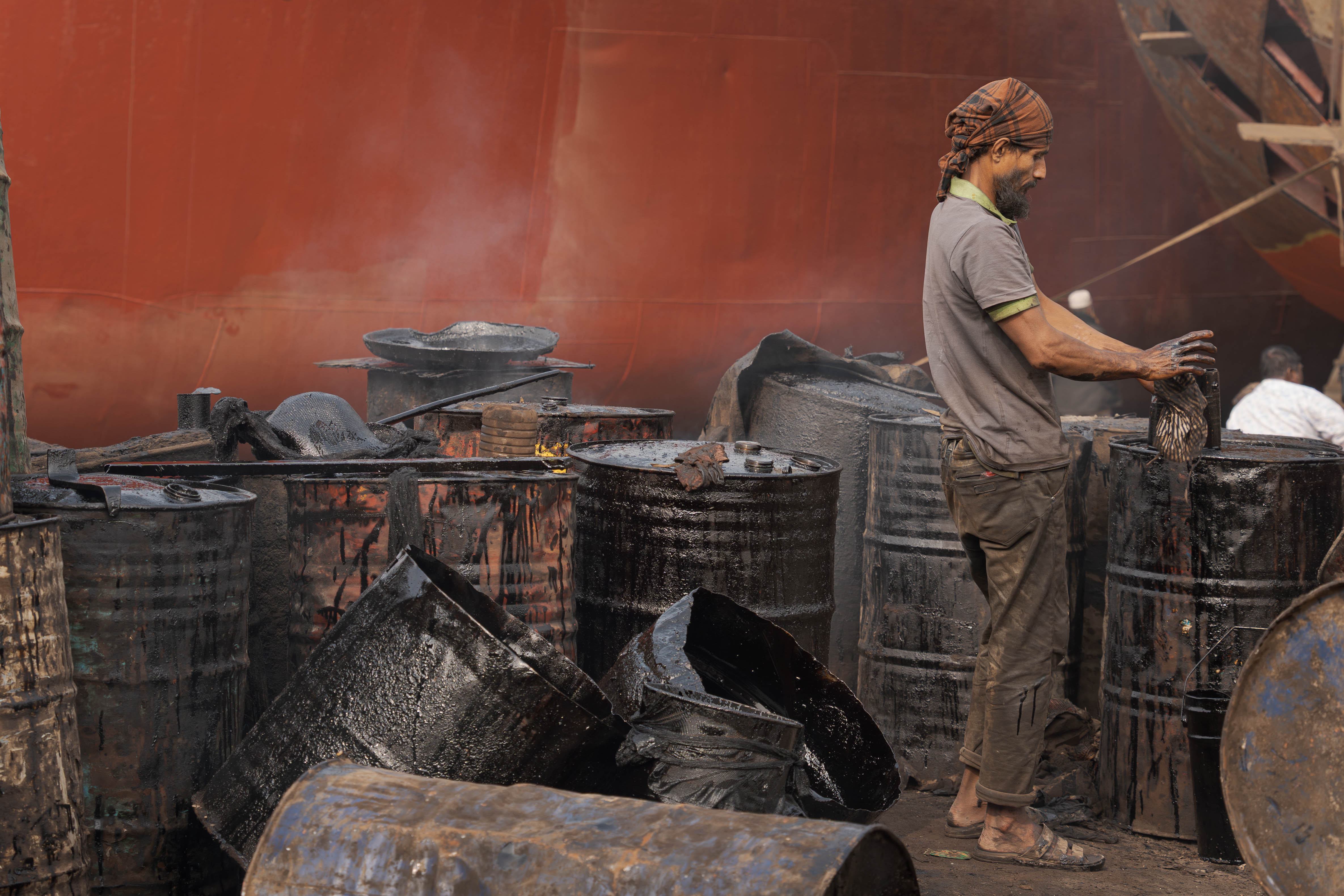
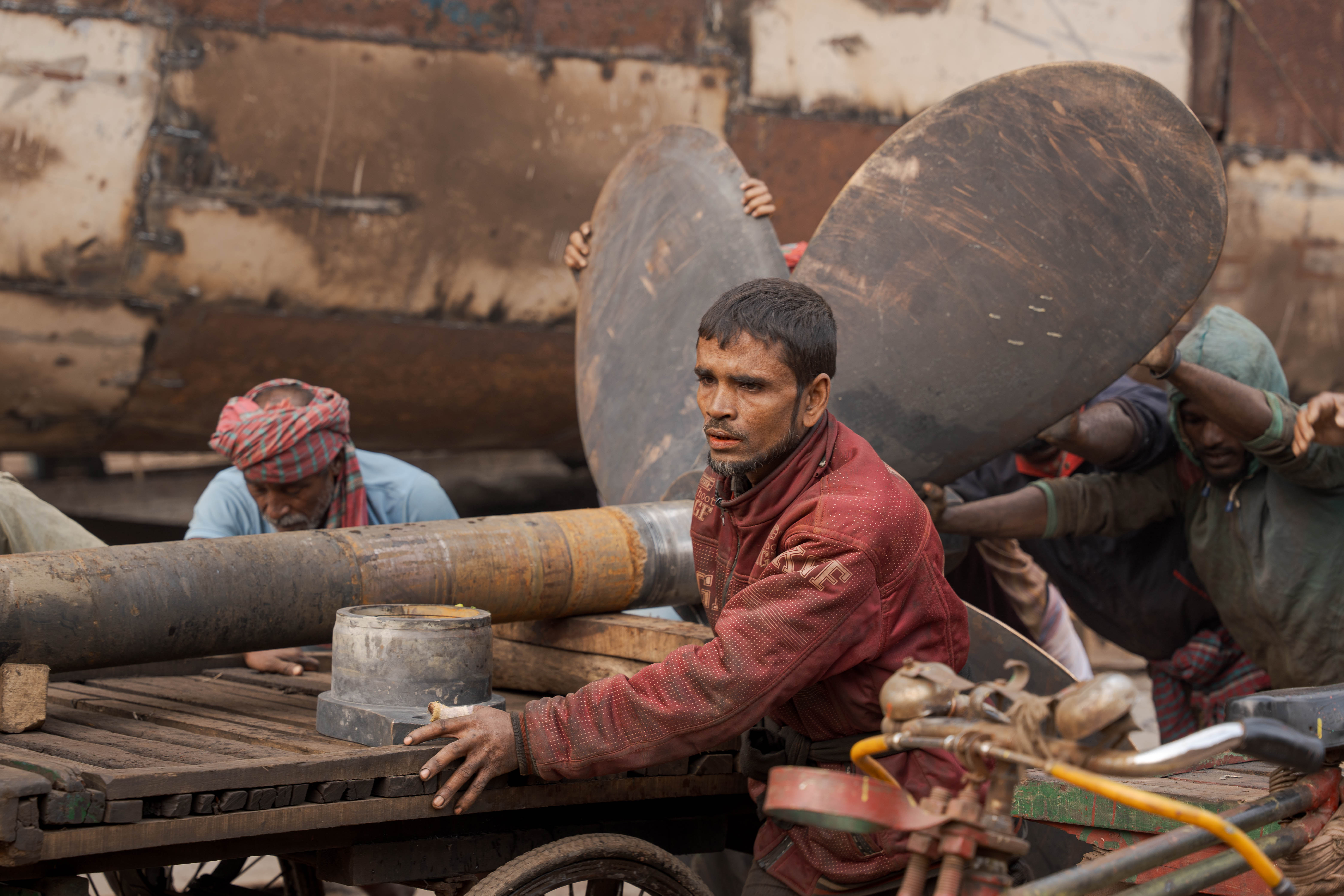
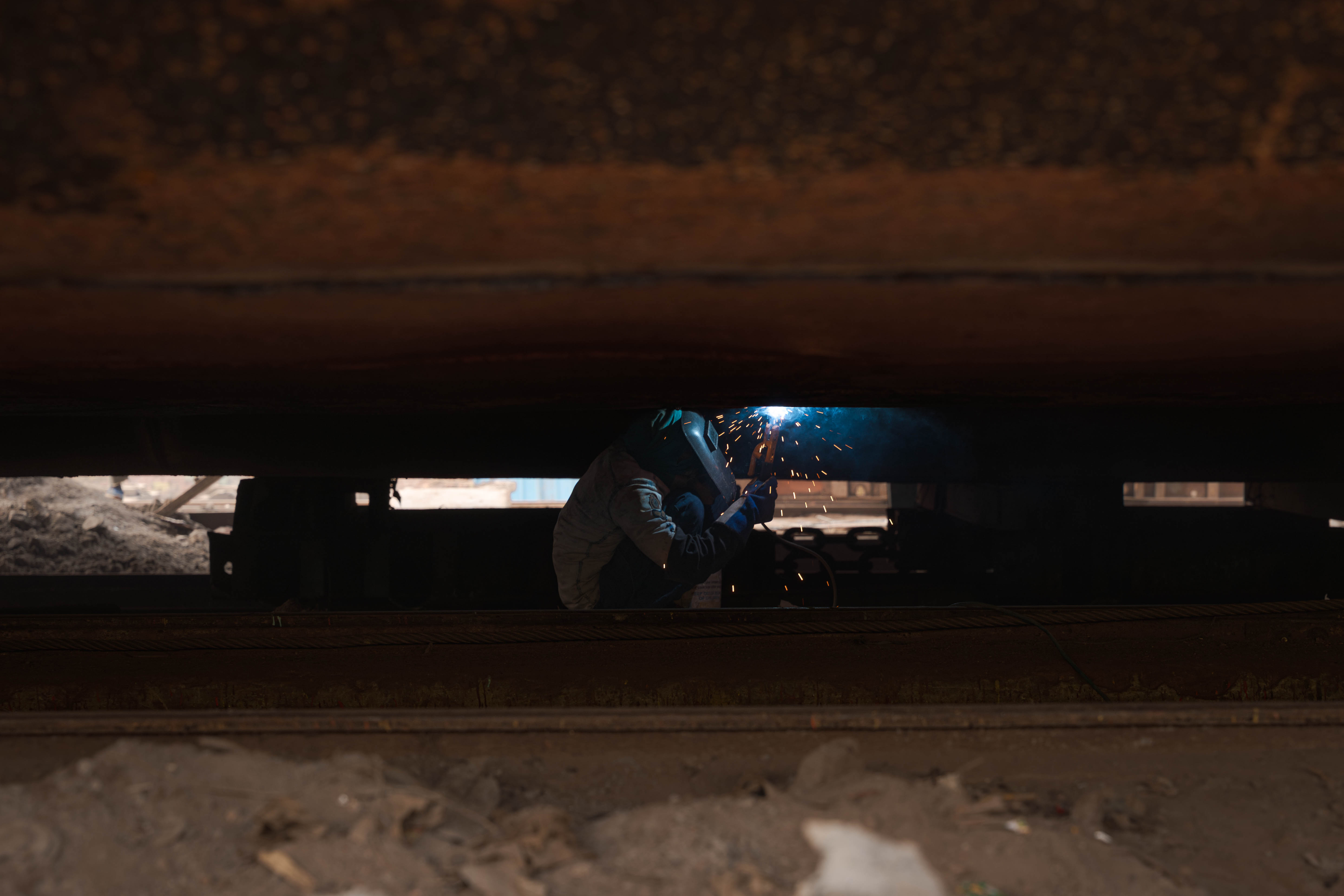
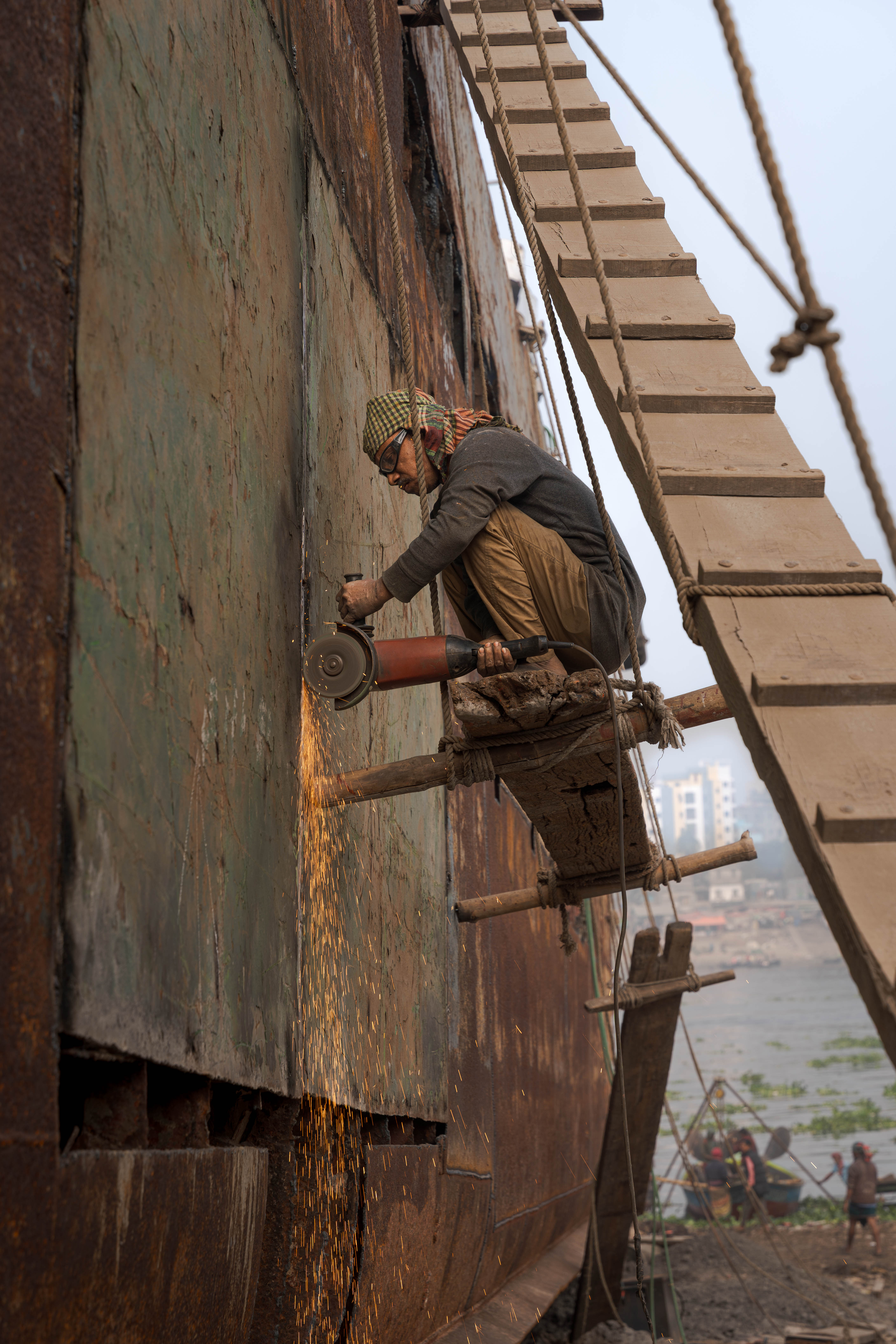
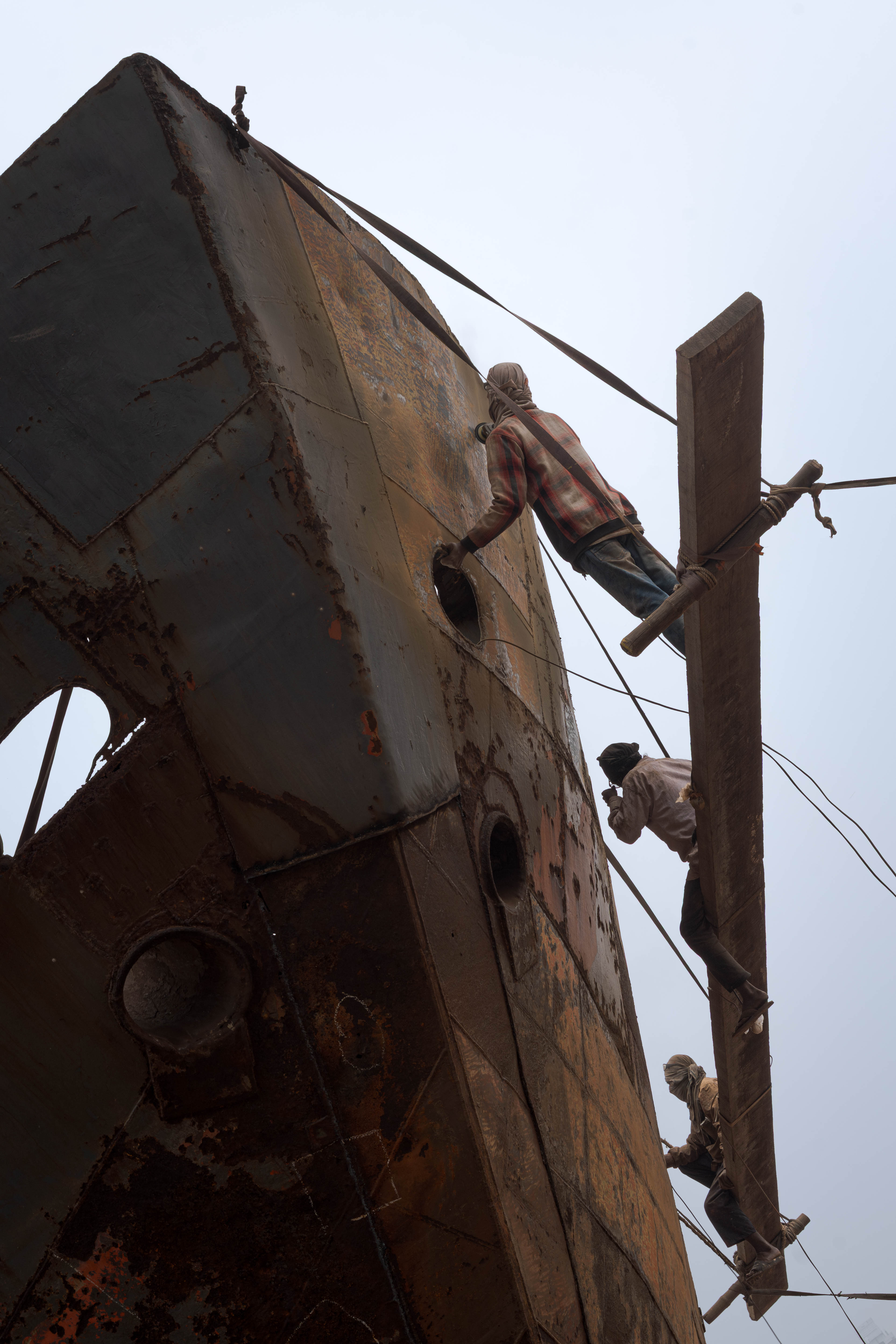
I wanted to look more closely at the actual process of dismantling the machines from which the metal was recovered. Closer to the shore, between the hulls of the grounded ships, work never stopped. Someone crouching on a makeshift scaffold — a swaying plank suspended from a thick rope — was cutting a large sheet of metal with a circular saw; another man was stirring a dark substance resembling motor oil in a rusted barrel with his bare hands. Everything around was seething; the sounds of tools mixed with rhythmic shouts urging men to push heavy components up the embankment. Amid the chaos, I noticed a young man wandering the area dressed in a long orange shawl. He was unusually tall and gave the impression of not belonging to this place — he was not engaged in any activity, but simply observing everything attentively from the sidelines. When asked what his role was here, he did not reply, only smiled subtly. I was curious about his story, and about why he seemed unable to communicate with us other than through gestures, even when addressed in his own language. His image — standing tall against a backdrop of sparks flying off rusty sheets of metal — is what stayed with me most. I never learned his story, even when I later asked the locals about him.
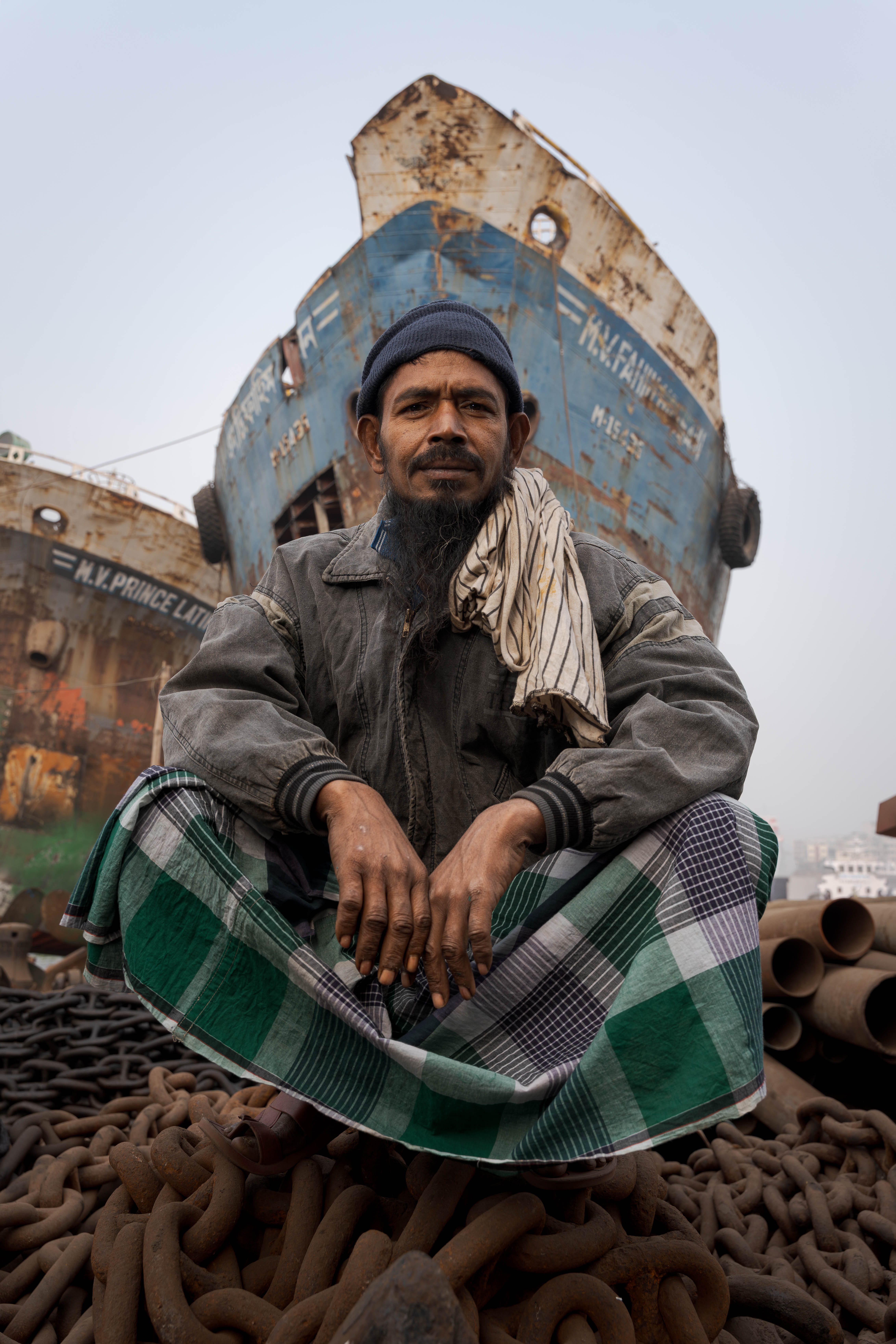
In random spots scattered across the site I kept finding more and more holes dug into the ground, serving as casting moulds. One of the alleyways had far more of them — here too, thick smoke hung low between the narrow walls of the buildings. Even some of the locals were covering their airways with thick gamchas — cotton scarves worn daily around the neck. I noticed men beginning to gather around one of the holes; Niloy suggested I move closer to the crowd, as one of the most demanding processes in the area was about to begin. In the middle of the yard stood an older man with a long grey beard, issuing instructions to his assistants. One of them used a long rod to lift the cover off a nearby pit. A vivid orange glow lit up its walls, and thick smoke rose upward, slowly changing colour from dark grey to a muted yellow. The workers gradually tipped the waste stored around the opening into the hole, each time releasing splashes of glowing liquid metal that landed near their bare feet. After a few minutes, when the smoke began to die down and all the raw material had changed its state, they moved it to the next room, where a new life awaited it.
Chciałem się dokładniej przyjrzeć samemu procesowi rozbiórki maszyn, z których pozyskiwano metal. Bliżej brzegu, pomiędzy kadłubami osadzonych statków, praca nie ustawała. Osoba kucająca na prowizorycznym rusztowaniu stworzonym z kołyszącej się deski podwieszonej na grubym sznurze przy użyciu piły tarczowej wycinała duży płat metalu; inny mężczyzna gołymi rękami mieszał w zardzewiałej beczce czarną substancję przypominającą olej silnikowy. Całe otoczenie wrzało, odgłos narzędzi mieszał się z rytmicznymi krzykami motywującymi ludzi do wpychania ciężkich elementów pod górę nabrzeża. W tym chaosie zauważyłem jednego młodego chłopaka, który przemierzał okolicę odziany w długi, pomarańczowy szal. Był ponadprzeciętnie wysoki i sprawiał wrażenie, jakby nie należał do tego miejsca – nie brał udziału w żadnej czynności, a jedynie obserwował wszystko uważnie z boku. Spytany o to, jaką pełni tutaj rolę, nie odpowiedział, a jedynie subtelnie się uśmiechnął. Byłem ciekaw jego historii i tego, dlaczego nie jest w stanie się z nami komunikować inaczej niż dzięki gestom, nawet gdy zostaje zagadnięty w swoim ojczystym języku. Jego widok – gdy stał dumnie na tle iskier strzelających z rudych płatów metalu – jest tym, co najbardziej utkwiło w mojej pamięci. Nigdy nie poznałem jego historii, nawet gdy po czasie pytałem o nią tutejszych ludzi.
W losowych miejscach rozsianych na terenie placówki znajdowałem coraz więcej dziur wydrążonych w ziemi, służących za formy odlewów. Jedna z alei miała ich znacznie więcej – tutaj też gęsty dym utrzymywał się nisko przy ziemi pomiędzy wąskimi ścianami budynków. Nawet niektórzy z miejscowych przysłaniali swoje drogi oddechowe grubymi gamchami – bawełnianymi chustami noszonymi na co dzień na szyi. Zauważyłem, że wokół jednej z dziur zaczynają gromadzić się mężczyźni; Niloy zasugerował, żebym podszedł bliżej tłumu, bo zaraz rozpocznie się jeden z najbardziej wymagających procesów w okolicy. Pośrodku placu stał starszy mężczyzna z długą, siwą brodą i wydawał polecenia otaczającym go pomocnikom. Jeden z nich przy użyciu długiego pręta uchylił wieko pobliskiej dziury. Jaskrawy, pomarańczowy blask rozświetlił jej ściany, a w górę uniósł się gęsty dym, który powoli zmieniał barwę z ciemnoszarej na przytłumioną żółć. Pracownicy stopniowo wrzucali do otworu składowane wokół odpady, za każdym razem uwalniając bryzgi rozżarzonego, płynnego metalu spadające w pobliżu ich bosych stóp. Po kilku minutach, gdy dym zaczął przygasać, a cały surowiec zmienił swój stan skupienia, przenieśli go do następnego pomieszczenia, gdzie czekało go nowe życie.
Among the many glaring situations I had grown accustomed to, some were still shocking to me. I could not help but marvel at how the locals handled dangerous tools with no safety measures whatsoever. Using a gas cylinder as a step to reach a higher level with a circular saw? Gripping the sharp edge of rusted metal with a bare hand? The aforementioned plank swing serving as scaffolding? At every turn, situations like these — which must have been daily occurrences and likely caused numerous accidents, none of which were of course recorded anywhere. Seeing all of this, it was not difficult to answer the question of why it is precisely this kind of place that ships go to at the end of their lives. Why does a significant portion of the world's fleet finish its course in Bangladesh, India, or Pakistan?
Pośród wielu rażących sytuacji, do których zdążyłem się przyzwyczaić, niektóre wciąż były dla mnie szokujące. Nie mogłem wyjść z podziwu, jak miejscowi posługują się niebezpiecznymi narzędziami, bez żadnych zabezpieczeń. Używanie butli gazowej jako stopnia, żeby dosięgnąć piłą tarczową wyższego poziomu? Trzymanie się gołą dłonią ostrej krawędzi zardzewiałego metalu? Wspomniana wcześniej huśtawka z deski służąca za rusztowanie? Na każdym kroku podobne sytuacje, które musiały być codziennością i prawdopodobnie doprowadzały do wielu wypadków – których statystyk oczywiście nikt nie prowadził. Widząc to wszystko, nietrudno było sobie odpowiedzieć na pytanie, dlaczego akurat w to miejsce trafiają wszystkie statki kończące swój żywot. Dlaczego znaczna część światowej floty kończy swój kurs w Bangladeszu, Indiach czy Pakistanie?
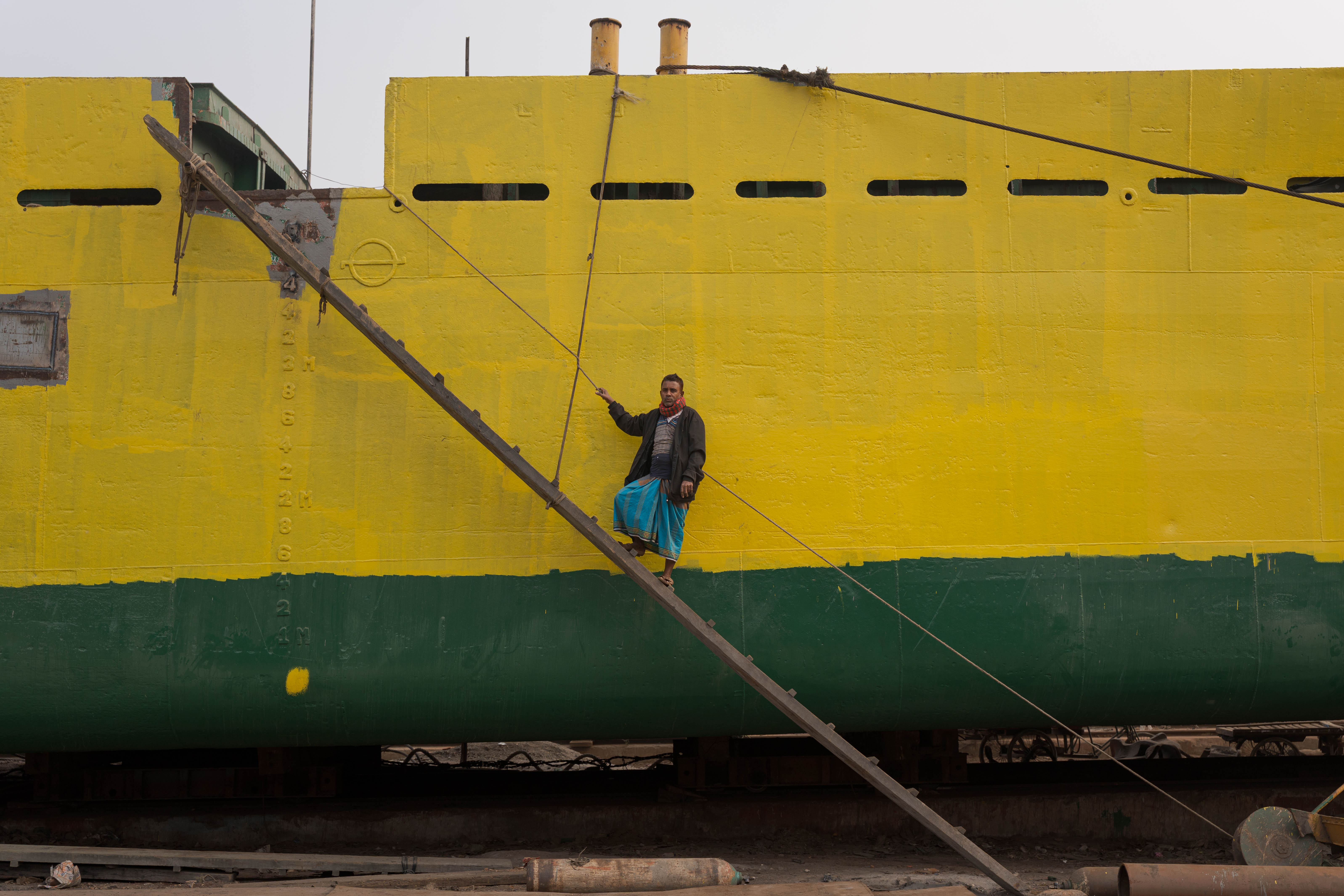
The average lifespan of a vessel is usually 25 to 30 years. After that, most of them become too expensive to maintain. When a ship stops turning a profit, it is sent for demolition — but before that happens, it is sold to intermediaries who most commonly change its flag and name, allowing large companies to distance themselves from responsibility and inconvenience. The Indian subcontinent is an ideal location for this type of operation due to costs. Wages there are among the lowest in the world, all work is carried out using simple and inexpensive tools, and it requires almost no infrastructure. Similar operations in Europe or North America are conducted in controlled environments, with safety standards upheld and workers' rights respected, and substances potentially harmful to the environment must be properly disposed of. All of this generates additional costs. International agreements such as the Basel Convention restrict the cross-border movement of hazardous waste — however, through the existence of a so-called grey zone, companies are able to sell their vessels shortly before they are classified as waste, thereby circumventing the restrictions. By the time tonnes of degraded metal reach the country where they are to be dismantled, the original owner has long forgotten about their existence, and any sense of responsibility — if it ever existed — has vanished.
(automatically translated — original text was written in Polish)
Średni żywot jednostek pływających to zwykle 25–30 lat. Po tym czasie większość z nich staje się zbyt droga w utrzymaniu. Gdy statek przestaje przynosić zyski, zostaje wysłany do rozbiórki, lecz zanim to się stanie, jest sprzedawany pośrednikom, którzy najczęściej zmieniają jego oflagowanie oraz nazwę – w ten sposób duże firmy mogą się zdystansować od odpowiedzialności i zmartwień. Subkontynent indyjski jest idealnym miejscem do tego typu operacji ze względu na koszty. Wynagrodzenia plasują się tutaj pośród jednych z najniższych na świecie, cała praca odbywa się przy użyciu prostych i tanich narzędzi i nie wymaga niemal żadnej infrastruktury. Podobne przedsięwzięcia w Europie czy Ameryce Północnej są przeprowadzane w kontrolowanych środowiskach, z zachowaniem norm bezpieczeństwa i poszanowaniem pracownika, a potencjalnie szkodliwe dla środowiska substancje muszą być utylizowane. To wszystko generuje dodatkowe koszty. Międzynarodowe umowy, takie jak Konwencja Bazylejska, ograniczają transgraniczne przemieszczanie niebezpiecznych odpadów, jednak dzięki istnieniu tak zwanej szarej strefy firmy są w stanie sprzedawać swoje jednostki na chwilę przed tym, nim zostaną one uznane za odpad – omijając w ten sposób restrykcje. Zanim tony zniszczonego metalu dopłyną do kraju, w którym mają zostać rozmontowane, ich oryginalny właściciel już dawno zapomina o ich istnieniu, a poczucie odpowiedzialności – jeśli takowe kiedykolwiek istniało – znika.